

Jannieke
During the first few weeks of my pregnancy, we ended up at Aan de Laak. Our first thought was, “That’s the place for us!“ And we were right! The first phone call, asking if we could…

We provide support during labor both at home and at the birthing center. Throughout labor, we closely monitor you and your baby. We offer the best possible support and guidance! If any complications arise, we’ll take immediate action and refer you to an obstetrician.
During prenatal checkups and at the Centering Pregnancy program, we provide more information about childbirth. We’ve also created informative videos. Prepare at your own pace! A free course for both of you!
The following informational brochures are interesting and worth reading:
How do you prepare?
How do you deal with pain?
Which posture is right for you?
During your pregnancy, we’ll discuss your wishes and expectations. A helpful tool for this is the birth plan. We tailor our care to your needs.
Don't forget to check out the video about the postpartum period Check it out!
Labor usually begins with contractions, but it could also be a false alarm.
In the final months of your pregnancy, you may have already felt this: your uterus sometimes contracts briefly. The further along you are in your pregnancy, the more often this can happen. It’s caused by hormones and is called a ‘hard belly.’ It can feel uncomfortable, but there’s no need to worry about it. These contractions are not (pre)labor contractions, and they do not signal that labor is starting.
The following signs usually indicate that labor has not yet begun:
Labor usually begins with contractions. Sometimes these contractions are painful right from the start and come in quick succession. But usually, at first, they’re still short, irregular, and not very painful. You can often just keep doing what you’re doing. At most, you might pause every now and then because you feel something. These ‘pre-contractions’ help soften the cervix in preparation. To determine whether labor has truly begun, the midwife monitors your contractions and checks the cervix during an internal exam. This helps her get a good sense of what stage of labor you’re in. Very early in labor, it can sometimes be difficult for the midwife to determine whether labor has truly begun. Don’t worry: a few hours later, you’ll know for sure! Labor can also begin with your water breaking. Even then, strong contractions are needed to dilate the cervix. They usually begin within 24 hours after your water breaks.
In our birth video You can find out everything you need to know about when to call during labor.
The normal time to give birth is between 37 and 42 weeks. If your contractions start or your water breaks before 37 weeks, please contact us immediately.
Anxiety
We believe it’s very important to be accessible. That’s why we encourage you to call us with any questions or concerns, both during your pregnancy and during labor.
Contractions
Contractions often start off gently. Every now and then, you’ll feel your belly tighten and experience some pain. Sometimes these may be false labor contractions, in which case the sensation will subside. If they are the contractions that signal the start of labor, they will intensify. You’ll notice this in the strength, duration, and frequency of the contractions. They’ll become more and more regular.
Call if you’ve been having contractions for an hour that last 60 seconds. If this is your first birth, call when the contractions come every 3 minutes (or more frequently). If this is your second or subsequent birth, call when the contractions come every 5 minutes (or more frequently).
If your contractions are very strong or you notice that things are progressing quickly, be sure to call sooner rather than later!
Water breaking
Call us if your water breaks. Note the time and check the color of the amniotic fluid. If the amniotic fluid is green or brown, you must call immediately, even in the evening or at night. If you experience clear or pink amniotic fluid leakage, call us immediately during the day. If this happens at night, you can wait until the next morning to call (unless otherwise agreed).
Blood loss
A small amount of bleeding is normal during childbirth. This is also called "show" and is often mucous-like. Heavy bleeding is not normal.
Want to know when to call during your pregnancy? Then check out here.
During the first few weeks of my pregnancy, we ended up at Aan de Laak. Our first thought was, “That’s the place for us!“ And we were right! The first phone call, asking if we could…

The ladies at Aandelaak were my midwives during three pregnancies. During the first two, I also attended the Centering Pregnancy sessions, which I highly recommend, by the way! The ladies are personable, warm, decisive, friendly, well-informed, and genuine…
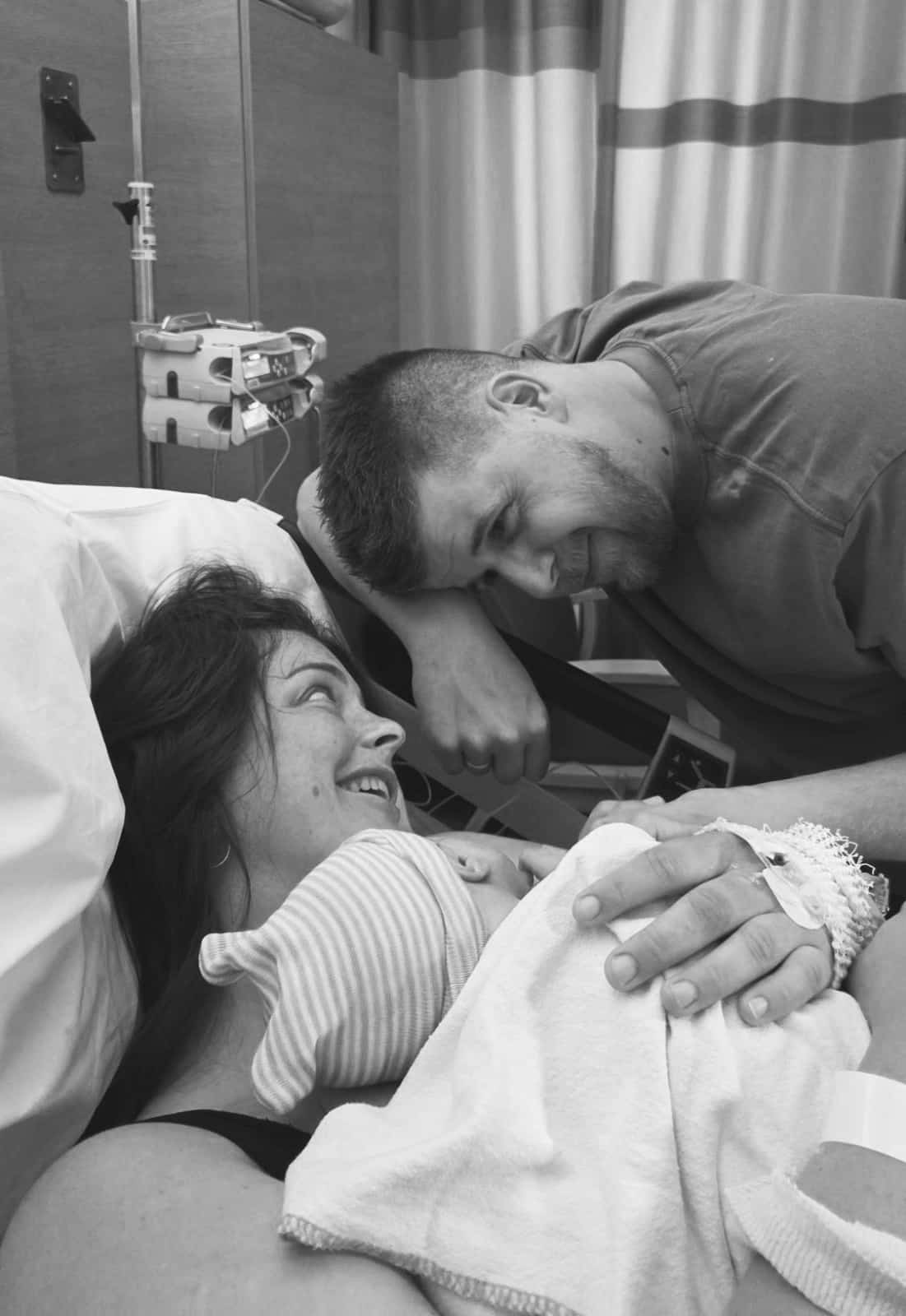
I’m so happy with the ladies at Aan de Laak. I had a challenging high-risk pregnancy, and they supported us incredibly well, both during and after the birth. I also really enjoyed the centering sessions, and we’re still in touch…