

Jannieke
During the first few weeks of my pregnancy, we ended up at Aan de Laak. Our first thought was, “That’s the place for us!“ And we were right! The first phone call, asking if we could…

Congratulations! If your pregnancy test is positive, please contact us right away. There’s no need to call your primary care physician first. We’ll schedule an appointment for around 8 weeks. You’ll have your first ultrasound right then. For more information, see “pregnancy”.
Around 8 weeks, a viability ultrasound can be performed. This is intended to check whether the baby’s heart is beating. The first-trimester ultrasound is then performed around 10–12 weeks. During this exam, we determine exactly how many weeks pregnant you are and calculate your due date. An earlier ultrasound is, of course, always possible if there are any concerns. At 35–36 weeks, a fetal position ultrasound is performed. If necessary, additional ultrasounds will be performed, such as growth ultrasounds.
For the 13- and 20-week ultrasounds, we will refer you to an ultrasound clinic that is specially qualified for this purpose, the Prenatal Screening Center. This ensures the quality of this specialized ultrasound examination.
We have three consultation locations: in Hoevelaken, Amersfoort Vathorst, and Nijkerk. Consultations are available on Mondays, Tuesdays, Wednesdays, Thursdays, and Fridays. It is also sometimes possible to schedule an appointment in the evening.
Most of the symptoms you’re experiencing are normal during pregnancy. Still, it’s always a good idea to keep an eye on them. Feel free to call our cell phone number if you have any symptoms or questions! For certain symptoms, you should always call us right away:
Eat a healthy, varied diet and don't eat more than usual. The food pyramid shows what you need each day.
Stay active or start moving. Exercising for half an hour every day helps you relax.
What you shouldn't eat or drink:
On the website of the nutrition center You'll find a lot more information about nutrition there.
Do you have trouble eating healthy, or are you overweight and would you like some extra guidance with this during your pregnancy? If so, visit a dietitian For more information.
– Use medication only after consulting a healthcare professional.
As a practice, we offer the following for free videos about childbirth and the postpartum period. This way, you can prepare for childbirth at your own pace.
We also offer a free breastfeeding class for our clients.
View all here Prenatal classes.
Starting at 4 weeks:
Starting at 11 weeks:
For 24 weeks:
Before 36 weeks:
Please feel free to call us anytime if you have back or pelvic pain. We can give you some initial advice right away. It’s also often a good idea to contact a physical therapist or Cesar therapist. Some therapists specialize in treating pregnant women. We recommend making an appointment with one of these specialists.
Vathorst
Vathorst Physical Therapy Center
Fyzie Physical Therapy (Arcanum/Heideweg)
Hoevelaken
Uttien and Vermeer Physical Therapy and Manual Therapy Practice
Pelvic Exercise Therapy—Cesar Exercise Therapy, Melissa Smit => at our practice!
Nijkerk
Fortius | Physical Therapy in Nijkerk
Physical Therapy at the Corlaer Health Center
De Nije Veste Physical Therapy
Achterveld
Pelvic Physical Therapy – Achterveld Physical Therapy
Bleeding during pregnancy is always alarming. Before 12 weeks of pregnancy, it may be caused by the well-supplied cervix. It may also be related to a miscarriage. So it’s always a good idea to call us if you experience any bleeding. We’ll then provide you with further information.
The 22-week vaccination ensures that the baby is protected against whooping cough from birth.
For more information, visit the website www.22wekenprik.nl
Labor usually begins with contractions, but it could also be a false alarm.
In the final months of your pregnancy, you may have already felt this: your uterus sometimes contracts briefly. The further along you are in your pregnancy, the more often this can happen. It’s caused by hormones and is called a ‘hard belly.’ It can feel uncomfortable, but there’s no need to worry about it. These contractions are not (pre)labor contractions, and they do not signal that labor is starting.
The following signs usually indicate that labor has not yet begun:
Labor usually begins with contractions. Sometimes these contractions are painful right from the start and come in quick succession. But usually, at first, they’re still short, irregular, and not very painful. You can often just keep doing what you’re doing. At most, you might pause every now and then because you feel something. These ‘pre-contractions’ help soften the cervix in preparation. To determine whether labor has truly begun, the midwife monitors your contractions and checks the cervix during an internal exam. This helps her get a good sense of what stage of labor you’re in. Very early in labor, it can sometimes be difficult for the midwife to determine whether labor has truly begun. Don’t worry: a few hours later, you’ll know for sure! Labor can also begin with your water breaking. Even then, strong contractions are needed to dilate the cervix. They usually begin within 24 hours after your water breaks.
In our birth video You can find out everything you need to know about when to call during labor.
The normal time to give birth is between 37 and 42 weeks. If your contractions start or your water breaks before 37 weeks, please contact us immediately.
Anxiety
We believe it’s very important to be accessible. That’s why we encourage you to call us with any questions or concerns, both during your pregnancy and during labor.
Contractions
Contractions often start off gently. Every now and then, you’ll feel your belly tighten and experience some pain. Sometimes these may be false labor contractions, in which case the sensation will subside. If they are the contractions that signal the start of labor, they will intensify. You’ll notice this in the strength, duration, and frequency of the contractions. They’ll become more and more regular.
Call if you’ve been having contractions for an hour that last 60 seconds. If this is your first birth, call when the contractions come every 3 minutes (or more frequently). If this is your second or subsequent birth, call when the contractions come every 5 minutes (or more frequently).
If your contractions are very strong or you notice that things are progressing quickly, be sure to call sooner rather than later!
Water breaking
Call us if your water breaks. Note the time and check the color of the amniotic fluid. If the amniotic fluid is green or brown, you must call immediately, even in the evening or at night. If you experience clear or pink amniotic fluid leakage, call us immediately during the day. If this happens at night, you can wait until the next morning to call (unless otherwise agreed).
Blood loss
A small amount of bleeding is normal during childbirth. This is also called "show" and is often mucous-like. Heavy bleeding is not normal.
Want to know when to call during your pregnancy? Then check out here.
Read all about preparing for childbirth in this one brochure.
Yes, we do! Check it out here Watch our video or read the text below.
During pregnancy, people often ask where you plan to give birth. There are many different opinions on this—what choice will you make, and why?
There are two places where you can give birth: at home or in the hospital. But giving birth in the hospital can take various forms.
First of all, you may be advised to give birth in the hospital because there is a reason why giving birth in the hospital—which is a secondary-care facility—is recommended. In that case, you will give birth medical. In many cases, prenatal care is already provided by secondary care providers, for example, in the case of a multiple pregnancy. However, it’s also possible that secondary-care providers will take over prenatal care, for example, if your baby is in a breech position after 37 weeks or if your previous delivery was a C-section.
It’s also possible that your delivery will take place under a shared responsibility model, known as B-D Indications. We are responsible for your care during childbirth, but we do recommend giving birth in the hospital. The reason for this is that even before labor begins, there is already an increased chance that you might end up in the hospital. For example, if you lost a lot of blood during a previous delivery or if the baby needs to be examined by a pediatrician after birth. To prevent the increased risk of having to be transferred from home to the hospital in such cases, we recommend giving birth in the hospital. You’ll still be able to give birth with our support, but if a risk arises, there will be no need for a transfer. Additionally, the secondary care team is already partially aware of the situation, which means less time is needed for a handoff.
If you are not considered to be at increased risk prior to delivery, you have the option of giving birth at home or in the hospital.
What are the differences between them, and why would you choose one over the other?
Home is your own familiar environment, where you’re often more relaxed. This can help ensure a smooth delivery. You can move around in the different rooms of your home. You don’t have to get in the car to go to the hospital, and you won’t have to travel anywhere after giving birth either. You’re less likely to develop infections or require medical interventions, such as labor-inducing drugs or an epidural.
A birth center is a place within the hospital where you can give birth. At the Amersfoort, it’s located on the same floor as the delivery rooms. The rooms are tastefully decorated. You have the option of giving birth in a birthing tub, and one of the two rooms is equipped with nitrous oxide. We work with a team of permanent maternity nurses who assist with care during childbirth. We’ll contact them to check for availability when we take you from home to the birth center.
If you give birth at a birthing center, there is no contact with the hospital staff. This means they don’t know who is at the birthing center. If you have a medical indication, we will contact the medical staff. They will then check if there is space available in the delivery rooms. It’s possible that there won’t be any space available and that you’ll need to be transferred to another hospital. In emergency situations, there’s always space available.
What will you choose?
Neither option is safer than the other. You should give birth wherever you feel most comfortable.
As midwives, we are qualified to assist with home births or births at a birthing center. We monitor the progress of labor. If any risks arise, we will discuss them with you and contact the secondary care provider to take over your care.
When will you make your decision?
The moment when the decision ‘must’ be made is during labor. With your first child, we head to the hospital when you’re about 6–7 cm dilated, and with your second child, often as soon as you enter the active phase—meaning contractions every 5 minutes that last for one minute. That’s when you really need to make the decision. You’ve likely already developed a preference for where you want to give birth earlier in your pregnancy. In any case, it’s important to think about the different options during your pregnancy and to discuss them with your partner. If you’ve made your (preliminary) choice during your pregnancy, it would be great if you could let us know as well.
Sometimes you may find that you ultimately no longer have a choice. This could be because you’re advised to give birth in the hospital for medical reasons, or because things are progressing so quickly that we no longer have the option of getting to the hospital safely. In the latter situation, labor has already progressed to the point where it’s safer to stay at home. So don’t just prepare for the location where you’d most like to give birth—also keep in mind that things can sometimes turn out differently.
At home, at the birthing center, and in the outpatient clinic, anyone you wish to have there is welcome to attend. In addition, the postpartum care team will be present. Students may also be present, but this will, of course, be discussed beforehand.
If it's a medical situation, a nurse, midwife, or physician assistant will be present, and possibly a gynecologist as well. In a hospital setting, medical residents may also join the team.
We also stop by regularly. Of course, we provide “personalized care” here as well, and the frequency and duration of the visits will depend on your situation.
There is plenty of time to discuss questions and issues. We provide medical checkups, give (Breast)feeding counseling, discuss emotions and talk After the birth, we always consult with the postpartum care provider. If she has any concerns, she will discuss them with us. If you have any questions or problems, you can always contact us—even in the evening or at night.
We work with every postpartum care agency. The agencies we work with most frequently are members of the Postpartum Care Partnership. This allows us to collaborate within the Midwifery Partnership.
The participants in the KSV are:
Kraamzorggroep Cooperative (This is an association of several self-employed professionals.)
During your prenatal checkups or through Centering Pregnancy, we’ll provide you with the necessary information about breastfeeding or formula feeding.
With our Breastfeeding Evening Lactation consultant Annemarie Aalders will provide you with comprehensive information about breastfeeding.
View it here Breastfeeding Information Booklet.
View it here Formula Information Booklet.
There are a great many wedding registry lists in circulation. We found the Consumer Association list Good to use.
You'll need the maternity kit before and during the first week after giving birth. You'll often receive this from your health insurance provider. You can also buy the items separately or as a set. For the baby, see this one packing list.
You ovulate even before your period starts. Since you don’t know when your period will return after giving birth, you also don’t know when you’ll be fertile again. This can happen as early as 4 weeks later. Keep this in mind and use birth control if necessary. www.anticonceptie.nl. We'll provide you with more information about this during pregnancy and the postpartum period.
We also install Spirals in Practice.
The first few weeks after giving birth might not go as you expected. If you find yourself experiencing feelings of gloom If you notice this, we recommend that you bring it up during the follow-up consultation. If these feelings are particularly strong, this may indicate a postpartum depression or an increased risk of it.
For more information on this topic, please contact the Mental Health Fund.
Aandelaak Midwives stands for expertise, a small-scale practice, and a highly personalized approach. This allows us to provide you with the best midwifery care—tailored care focused on the client’s wishes. We offer optimal support and guidance throughout the process of trying to conceive, during pregnancy, childbirth, the postpartum period, and when having an IUD inserted.
Yes, we work there, too. We hold office hours in Hoevelaken, Amersfoort Vathorst, and Nijkerk. You’ll often find us in Nijkerkerveen and Nijkerk!
View here Our locations and addresses.
We work with a permanent team of 5 midwives. During maternity leave or vacations, a substitute midwife may be on duty. Of course, you’ll have the opportunity to meet her in advance!
We have one practice assistant who will answer the phone when you call our landline.
Read here Learn more about us!
Of course, we are BIG-registered and listed in our professional association’s quality registry. By regularly participating in continuing education and training courses, we maintain a high standard of care. The practice is part of the Vida midwifery cooperative. Within Vida, we share knowledge and expertise with fellow midwives and ensure high-quality midwifery care throughout the region.
Within the midwifery partnership, we collaborate extensively with the hospital, gynecologists, and postpartum care organizations. Sanne serves as a board member and treasurer for this organization.
Of course, we are always available for deliveries and questions at 06-21273314.
To make or reschedule an appointment, or for non-urgent questions, you can reach us by landline. View this page whenever Wilna is available.
During the first few weeks of my pregnancy, we ended up at Aan de Laak. Our first thought was, “That’s the place for us!“ And we were right! The first phone call, asking if we could…
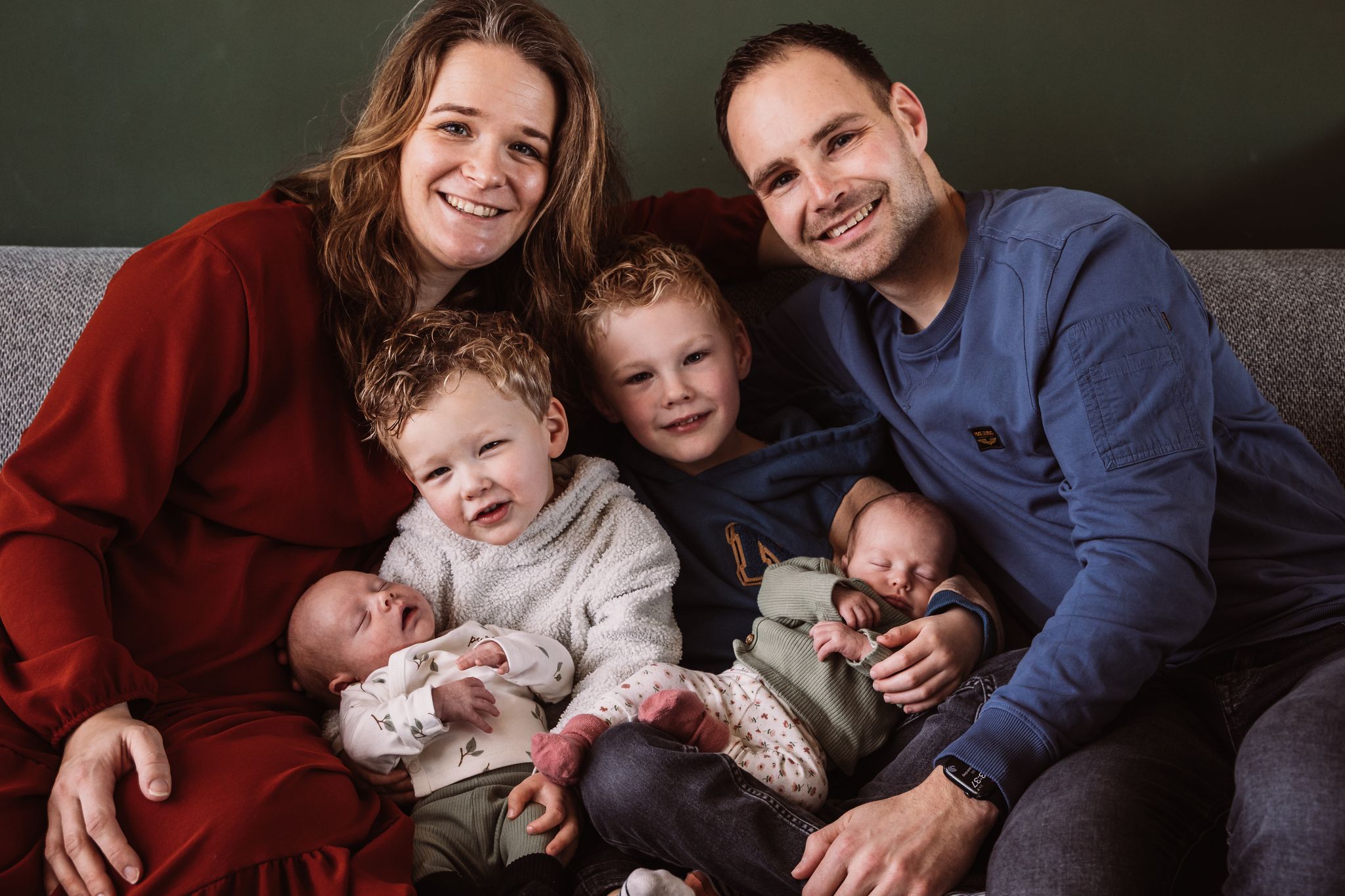
The ladies at Aandelaak were my midwives during three pregnancies. During the first two, I also attended the Centering Pregnancy sessions, which I highly recommend, by the way! The ladies are personable, warm, decisive, friendly, well-informed, and genuine…
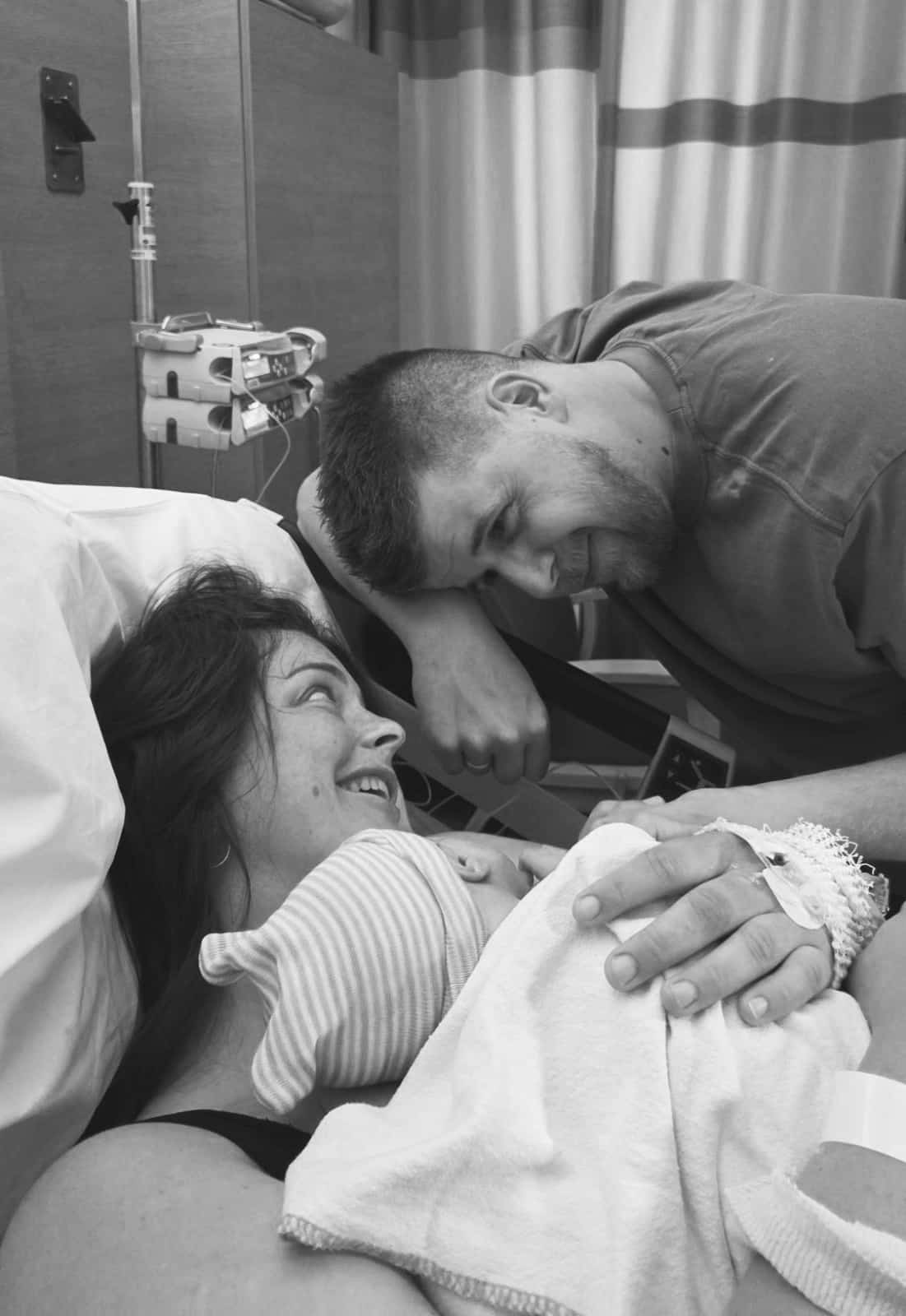
I’m so happy with the ladies at Aan de Laak. I had a challenging high-risk pregnancy, and they supported us incredibly well, both during and after the birth. I also really enjoyed the centering sessions, and we’re still in touch…