
During our last postpartum visit, we have a brief conversation about the return of the menstrual cycle. The question we ask the client at that point is: Have you thought about birth control yet? A very common response is: “There’s no way I’m going back on the pill—I took it for years and I’m done with all those hormones now.”
Yeah... so what should you do now? What are your options? What's right for you? Why would you choose one thing over another—or not?
If you look into it further, you’ll discover that ‘the pill’ isn’t the only way to prevent pregnancy. There are all kinds of options for preventing pregnancy, such as the Sensiplan (the natural method), a patch, an implant in your upper arm (Implanon), a vaginal ring (NuvaRing), and an IUD. If you’re looking for a method with fewer or no hormones—and something you don’t have to think about every day—the IUD could be a great option!
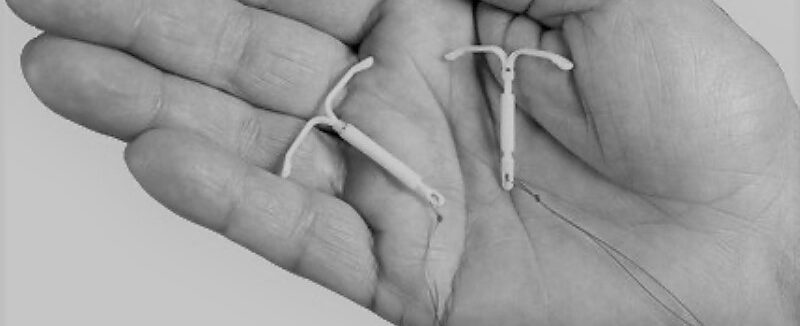
So what exactly is an IUD? At first, when I heard the term, I imagined it was shaped like the kind of spring you find in a pen. And having that in my uterus didn’t seem like an ideal option to me. But luckily… it turns out to have a completely different shape. The most common types of IUDs are small plastic devices shaped like the capital letter ‘T.’ They hang, as it were, inside your uterus. And that’s what provides birth control.
There are basically two types of IUDs: the hormonal IUD and the copper IUD. The hormonal IUD releases one hormone daily, unlike the (combination) birth control pill, which releases two. It also releases nearly four times fewer hormones daily than you take in with the pill. Ultimately, these are still hormones, and your body has to find a balance with them. As a result, you may experience some spotting every day for three to six months, even outside of your menstrual periods. In practice, this is often found to be quite bothersome. On the other hand, you’re protected for 5 years, you have minimal menstrual flow, and you never have to worry about anything again. There’s even a chance that you’ll stop menstruating entirely right after insertion or after those three to six months.
The copper IUD releases copper ions. This allows you to maintain your menstrual cycle, which some people find pleasant. However, it’s important to keep in mind that your periods may be heavier than you’re used to, both in terms of blood flow and abdominal cramps. The copper IUD is effective for 10 years.
You can find more details and information about copper and hormonal IUDs on our website:
If you still have questions or would like to discuss which method is right for you, I warmly invite you to schedule an appointment (by phone)!
Dirrianne