
There you are, with the baby on your belly… Your little bundle of joy is finally here! The delivery is over. “And now…?” is a question we hear often. It's time to walk you through it.
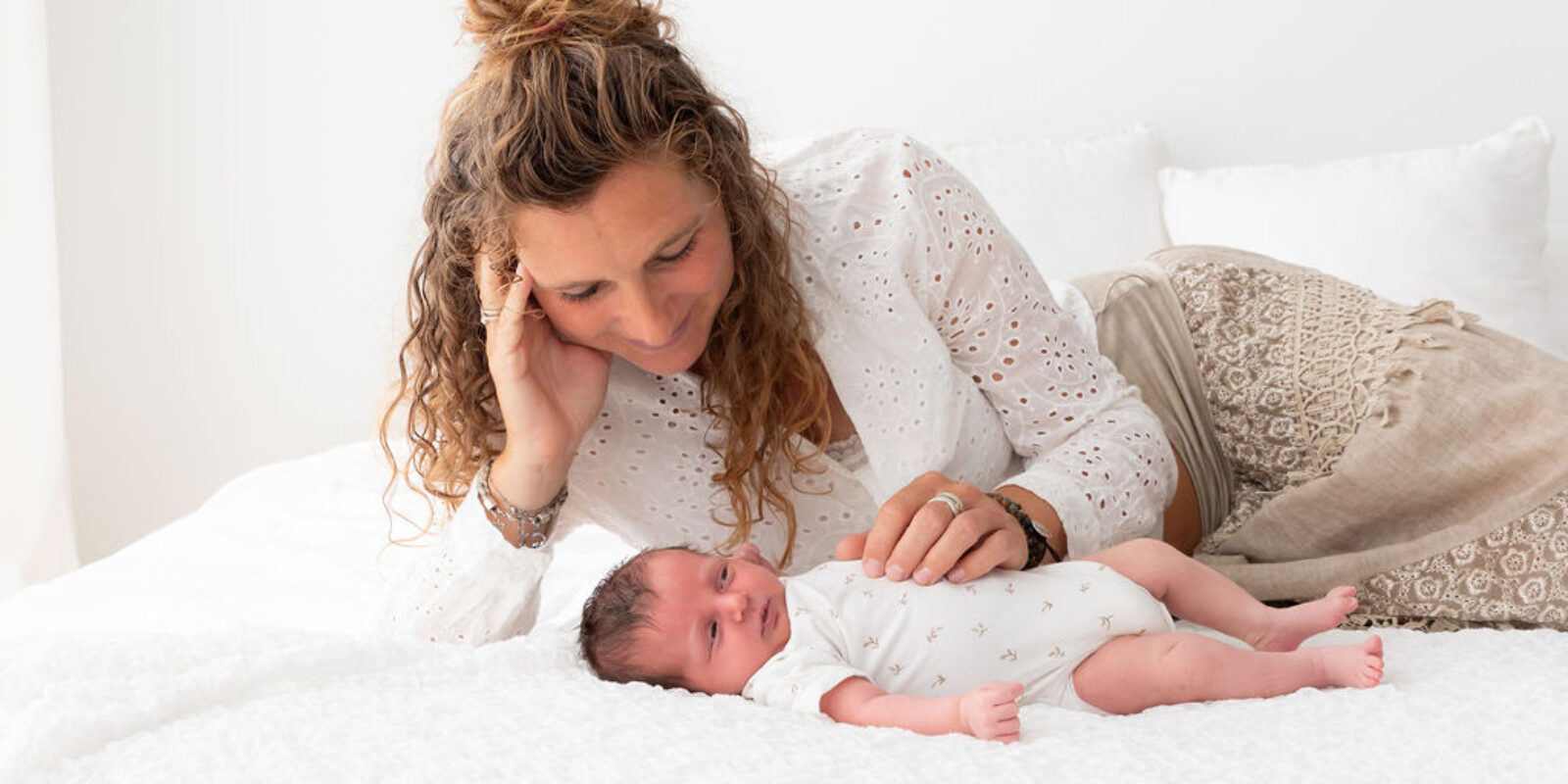
After the baby is born, you'll be able to hold him right on your chest. The Golden Hour It’s started! Skin-to-skin contact begins and is very important. This allows the baby to hear your heartbeat and voice and smell your scent—things that are familiar to him. Skin-to-skin contact causes levels of the hormone oxytocin (the “happiness hormone”) to rise even further, which is important for bonding and for the placenta to be delivered.
Yeah… the placenta. For months, you’ve been providing the baby with nutrients and oxygen through the placenta. Now the baby has to do that on its own. The placenta detaches from the uterine wall a few minutes after birth. This ensures the baby gets the very last bit of nutrients and oxygen even after leaving the womb. Once the umbilical cord has ‘stopped pulsating’ (no more blood is flowing from the placenta to the baby), it’s time to cut it. All partners are welcome to do this! This happens either before or after the placenta is delivered. Then it’s time for the placenta to be delivered as well; this usually happens within 30 minutes. One last push, using your final bit of strength, and the placenta is delivered. We’ll check to see if the placenta is complete and show it to you (if you’d like). It’s up to you to decide what you want to do with the placenta. Let yourself be inspired—the possibilities are endless: burying it in the garden, making a smoothie, or creating a cast. Although we’ll also happily dispose of it for you… 😉 (that’s usually what happens).
You're still buzzing from the adrenaline and endorphins (the body's own pain relief); that's what we use. Immediately after giving birth, it's time to close-knit . Of course, you won't have to go through this without pain relief—you'll be anesthetized before we begin. This helps minimize blood loss and ensures that this procedure can be performed safely in the future as well.
While you're waiting for the placenta to come out and for the incision to be sutured, the baby reaches for your breast. Time for the first breastfeeding session to start with. Most babies are still a little queasy, and it takes some practice, but this allows him to get used to the breast and helps stimulate your breasts to produce breast milk. If you don’t want to breastfeed, you can give the baby your pink give.
Just a moment recover …! You’ve certainly earned that. Time for some rusks with anise seeds and your first moment together as a family of three. We’ll take care of the paperwork in the meantime.
After the ‘golden hour,’ we’ll examine your newborn from head to toe. We’ll feel the fontanelles, check the ears, and assess the collarbones and palate. For baby boys, we’ll check to see if the testicles have descended. We’ll feel along the spine and test the reflexes. We’ll assess the stepping reflex—also known as “the first steps” (have your camera ready)—and the startle reflex (Moro reflex). Of course, we weigh the baby, measure their length, and take their temperature. We also administer a vitamin K shot for the first 8 days (oral drops) if you give your consent. After the review If you'd like, you can dress the baby.
Time to shower and then, feeling refreshed and full of energy, you can enjoy your little one in a clean bed as brand-new parents. And, of course, let your family know. We’ll give you instructions on how to make calls and say goodbye. We’ll see you again at the postpartum week!
Eline
Mohamed, S. S. A. (March 1, 2022). Effect of Skin-to-Skin Contact on Maternal and Neonatal Outcomes. Retrieved September 16, 2022, from https://ejhc.journals.ekb.eg/article_221379_29791.html
Onwuemene O. Postpartum hemorrhage management in 2012: predicting the future. Int J Gynaecol Obstet. Oct. 2012;119(1):3-5. doi: 10.1016/j.ijgo.2012.07.001. Epub Aug. 4, 2012